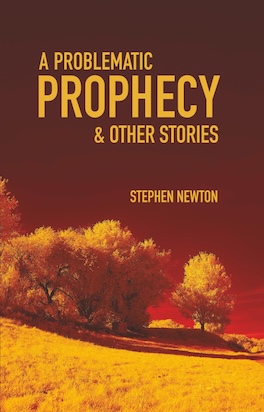
Stephen Newton’s storytelling is like a guide that acquaints readers with what they will soon read in this collection of fifteen fictional stories inspired by the author’s “random, unexplained events I have experienced that have haunted me for decades.”

"What I learned then was that writing would become another place for my heart and soul. I also learned it was possible to write and publish about people I know and loved and still keep a relationship with them."
"Since then, in my professional life as an educator and researcher I learned more about how our nervous systems work, how our mind is in all our nerves throughout our bodies...and how, different as we all may be, we have so much in common that connects us, and writers need to tap into that awareness."
"People want to know if, in writing so many poems that deal with David, I’m finding peace. I’m not looking for peace. I’m wanting to feel all of life — all of my share of joy and pain, all of my share of beauty and darkness."
"You see, I don’t believe you should write only about what you know. You take what you know to explore the infinite territory of what you don’t know..."
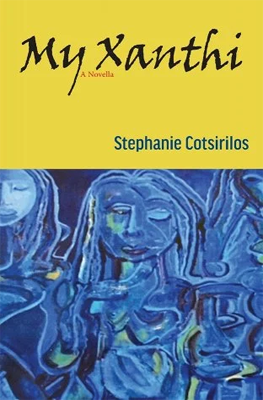
Even the sixty-six-year-old attorney Nick Milonas, the protagonist in Stephanie Cotsirilos’ novella My Xanthi, learns over thirty years of legal practice that justice has its own terrain, and sometimes jurisprudence may not be what it should be or how he expects it to act.
"To understand that this is a long game and you will not win, and that’s not important. Because it’s the act of writing as yourself, of conveying what you want to write, that matters."
"We can choose to face facts squarely and resolve to change, or we can continue in willful ignorance because the familiar is more comfortable. I think, given the choice, most young people would prefer the former. And providing that choice just may help our democracy realize more of its potential."
"Often, when I am beginning to write something new, I will compel myself to sit still, sometimes for hours, until a good enough idea occurs to me, and then I will not let myself leave that place until I have captured a flood of notes that follow."
Jeff Schnader was at Columbia University in 1972 where he participated in sit-ins, marches and protests against the Vietnam War. He took part in demonstrations in front of Hamilton Hall where students were beaten by N.Y. Tactical Police in full battle regalia. He graduated with a BA in physics. His short story, The Champion, won first prize in the 2020 Annual Quills Contest. His novel, The Serpent Papers, which will be published in February 2022 by The Permanent Press, was a short-listed finalist in the 2021 Blue Moon Novel Competition.